Showing posts with label Katayeb. Show all posts

Saturday, 12 December 2015

Role of Quds Force and Iranian affiliated militias in Syria

December 2015
Following the entrance of Russia into Syria and the bombing of opposition forces’ bases, the Iranian regime entered Quds Force, Lebanese and Iraqi militias and also other militias from Pakistan and Afghanistan and initiated a widespread attack against southern Aleppo under Russian airstrikes intending to take over Aleppo city.

Tuesday, 22 September 2015

Iraqi Army, police clashing with Quds Force-associated Hezbollah militants in Baghdad


One day after 18 Turk nationals were abducted from a stadium construction site in Baghdad’s Sadr City, carried out on Wednesday, September 2nd by a group of Katayeb Hezbollah militants wearing SWAT uniforms who raided the site with 20 bullet-proof, double axes vehicles, Baghdad Operations Command issued a statement saying:

Thursday, 20 August 2015

Introducing a Quds Force-linked terrorist militant group in Iraq and Syria

Group Name: Katayeb Imam Ali
Area of Activity: Syria and Iraq – currently 1,000 men in Syria
Date of Formation: May 2014
Group Leader: Sheikh Shebel al-Zeidi
Deputy: Ali Mousavi (Abu Hassanein)
In May 2014 under orders issued by Iran’s Revolutionary Guards Quds Force, former Iraqi prime minister Nouri al-Maliki gathered those members of the Asaeb al-Haq and Katayeb Imam Ali unhappy about their wages from their own groups, organizing them under a single command unit. Their ranks and files numbered at 2,000 back then and under Quds Force advice Maliki appointed an individual by the name of Sheikh Shebel al-Zeidi as the commander of this unit. This individual had very close relations with Quds Force chief Qassem Suleimani.

Monday, 3 August 2015

Quds Force using militants in Iraq – Part 4


6. Restructuring the Badr forces
- On June 19th a group of Quds Force commanders went to the 9th Badr office in Baghdad’s Jaderiye district and then went off to inspect various areas of the Iraqi capital. Abu Maryam Ansari, Hadi al-Ameri’s deputy was accompanying this group.

Tuesday, 28 July 2015

Quds Force using militants in Iraq – Part 3

Following advances made by the armed tribes and the series of defeats suffered by Maliki’s forces in al-Anbar and Mosul, a number of Quds Force experts and commanders stationed in Baghdad and began evaluating the situation on the ground in various fronts. Quds Force military experts in their evaluations on how to confront the armed tribes reached this conclusion that the urgent and immediate solution available under the current circumstances is to use its affiliated militants such as Asaeb al-Haq, Katayeb Hezbollah and Badr militants that needed to be restructured. Under orders issued by Qassem Suleimani and following the example of Revolutionary Guards Bassij units in Iran, the 9th Badr Corps forces with a newly structured ranks and file were dispatched to the warfronts, such as Diyala Province, to reinforce Maliki’s forces. For this new structure Suleimani called on retired Badr commanders – who had worked for the Quds Force back in Iran for years prior to 2003 – and dispatched them as Badr battalions on combat missions. In this regard former Badr commander Abu Mahdi al-Mohandes, a member of Suleimani’s inner circle, was called back and he is currently acting as Suleimani’s chief of staff in Iraq.

Monday, 27 July 2015

Quds Force using militants in Iraq – Part 2

2. Restructuring militant forces in Iraq
In late February a Quds Force commander by the name of Haj Abbas was sent to Iraq with a mission of restructuring militant forces linked to the Asaeb and other groups. These measures were carried out to prepare them for the war in al-Anbar. In his first steps he began restructuring the Asaeb al-Haq with completely new ranks and files, and also recruiting fresh members. The delayed paychecks of Asayeb members, some not paid for 3 months, were all provided for. This group once again launched its operations and their organized ranks were prepared to take part in the al-Anbar war.

Sunday, 26 July 2015

Quds Force using militants in Iraq – Part 1

1. History of using militant forces in al-Anbar Province
- Dispatching militants to the al-Anbar front dates back to mid-January 2014. After Maliki’s classic army and police forces suffered a large number of casualties and lost their spirits for urban warfare in their initial attacks against cities and towns in al-Anbar, the Quds Force began to take action and ordered its associated militias, including Asaeb al-Haq and Katayeb Hezbollah, along with Badr forces, to rush to the support of Maliki’s army and police units in al-Anbar.

Sunday, 19 July 2015

Quds Force plot to form Iraqi Revolutionary Guards


From long ago due to the degrading position of former Iraqi prime minister Nouri al-Maliki and continuing uprisings in this country that led to numerous defeats for Maliki’s army, Iran’s Quds Force has been plotting to form a proxy militant force similar to the Revolutionary Guards and Bassij forces inside Iran. 

Tuesday, 14 July 2015

Warning to all Persian Gulf countries on Quds Force terrorist attacks

I have read reports on the apprehension of a Quds Force element in Jordan. The presence of Quds Force elements in Middle East countries is nothing new for me and it has been years since the Iranian regime is dispatching agents not only to countries in its own backyard but also all the way to Europe. Tehran has been known to have a role in most terror attacks in Europe and Middle East countries. And the media covers this aspect of Iran’s foreign policy only in various occasions that Quds Force elements are arrested or intelligence is gathered proving the Quds Force having a role in such plots.

Monday, 13 July 2015

Active Quds Force presence – Saberin Unit – in Iraq and its members killed in fight against ISIS

18 June 2014
While Iranian officials in their official media talk about the policy of not sending forces to Iraq, a newly formed organ of this regime, known as the “Popular Headquarters in Defense of Shiite Sanctuaries” is recruiting volunteers to be dispatched to Iraq to confront Sunni tribes and ISIS; – Saberin Unit – whereas during the past year the Revolutionary Guards (IRGC) has been dispatching its forces to Iraq coinciding with the start of the Iraqi people’s uprising in Anbar. IRGC forces have entered Iraq in many areas under Quds Force command. Quds Force members carried out the following after the occupation of Mosul:

Saturday, 11 July 2015

Presence of Quds Force in Iraq – Part Two


Following this trend and to actively use Shiite militants, the last method agreed upon between the Quds Force and the command HQ of Maliki’s forces in the Anbar war was providing specific orders to Shiite militants to focus the attacks conducted by these groups in the Anbar frontier.

Monday, 6 July 2015

Militias in Iraq more dangerous than ISIS


General David Petraeus, former US CENTCOM commander, while pointing to the role of militias in saving Baghdad in the past, stressed in an interview with the  Iraqi News Site  that Shiite militias in Iraq, due to their integrity, are more dangerous than the ISIS organization.

Monday, 29 June 2015

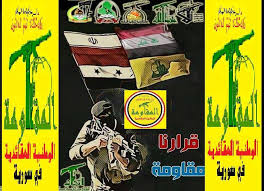
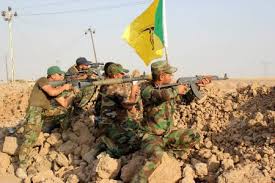
Introducing Militant Groups in Iraq – Katayeb Hezbollah


The Quds Force is currently expanding its sphere of influence in Iraq through its widespread network of affiliated militant groups. Senior Quds Force commanders, including Qassem Suleimani and Abu Mahdi Mohandess are in Iraq to organize and utilize these militant groups. Asayeb al-Haq, led by Gheis Khazali, along with the 9th Badr Corps militants led by Hadi al-Ameri, are the main such groups. Here is more input on the Katayeb Hezbollah that plays a major role in implement the Iranian regime’s policy in Iraq.

Quds Force in Iraq – Part 1


On 25 January 2014 a number of Quds Force advisors, experts in guerrilla and urban warfare, came to Iraq to provide Iraqi forces experience in street fighting, similar to Syria. They worked closely with Ali Gheidan and Fazel Barvari, commander of the “Golden Division” (dubbed the “Filthy Division” by US forces when in Iraq), training and providing their experience gained from Iran and Syria during the past few years. Their first suggestion was launching a force similar to Iran’s state-run Bassij paramilitary units using militant groups, emphasizing that in Syria they launched the civil defense force because the army is a classic force that can only fight foreign wars. However, unconventional wars that follow no rules and have a guerrilla nature demand a response of their own type, adding the army is of no use in such circumstances. They once again emphasized on fighting such wars by launching small guerilla units.