Showing posts with label Quds Force. Show all posts

Saturday, 18 June 2016

Iran pushing for no-confidence vote against al-Abadi


June 2016
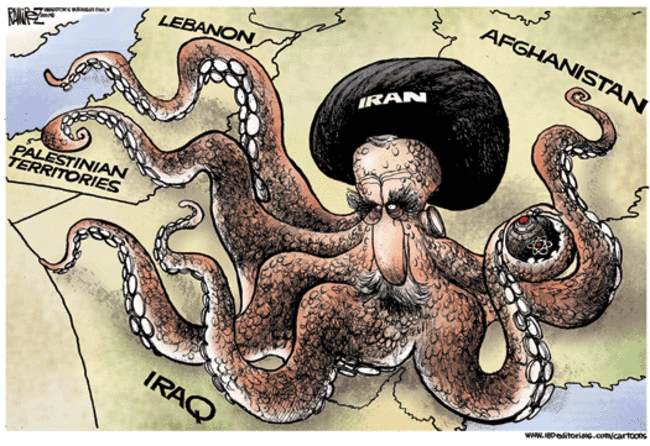
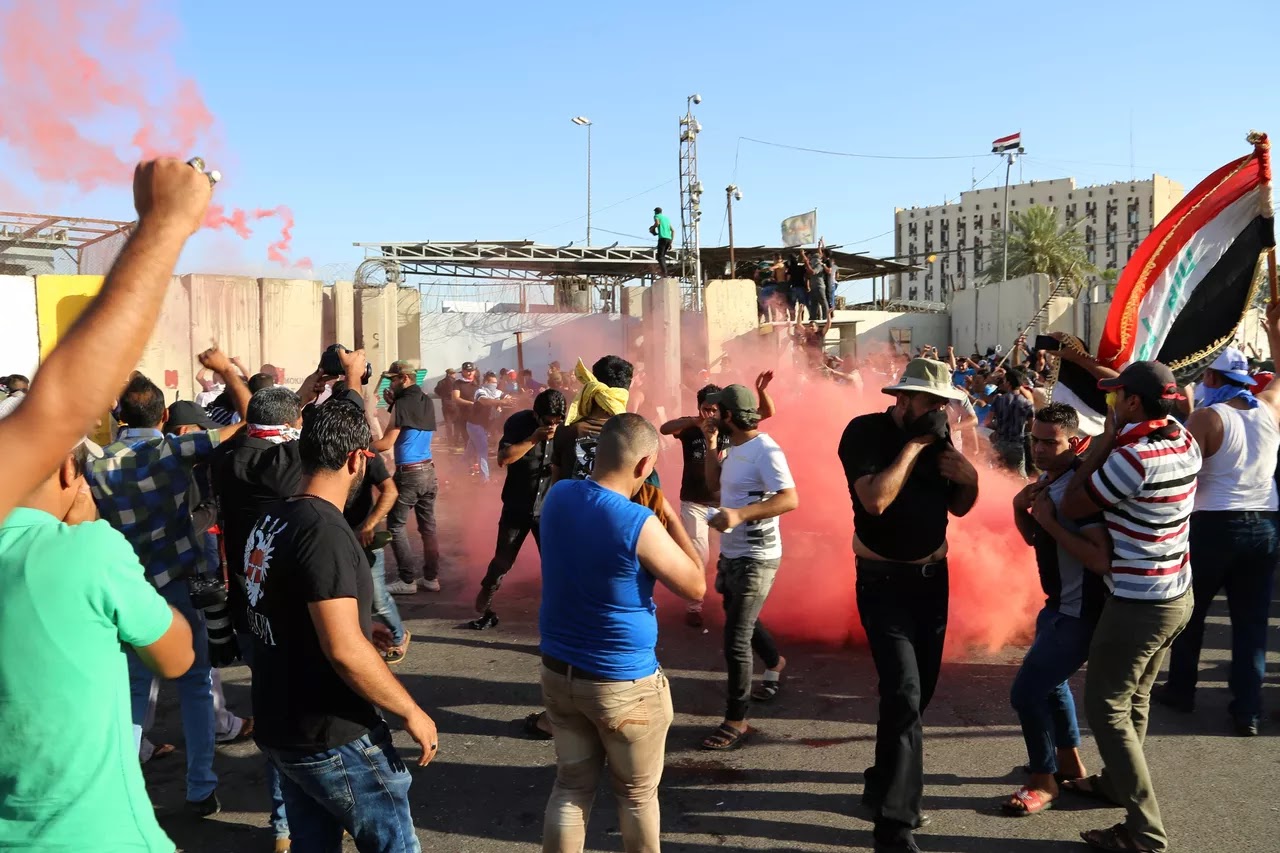
The occupation of the Iraqi Parliament and Prime Ministry Office afterwards by protesters proved Iran has lost control of the situation on the ground in Iran and this regime is no longer dictating its will to Shiite groups.
In most demonstrations despite the fact that the Iranian ambassador in Iraq would call on its associated elements to refrain from voicing anti-Iranian regime slogans, the protesters – infuriated over poverty and lack of security – were heard chanting “Iran, Out, Out.” This slogan disrupted all the Iranian regime’s calculations and in a senior Iranian regime official has reportedly said Tehran spent billions in Iraq and they still chant slogans against the Islamic republic of Iran in their demonstrations.

Friday, 17 June 2016

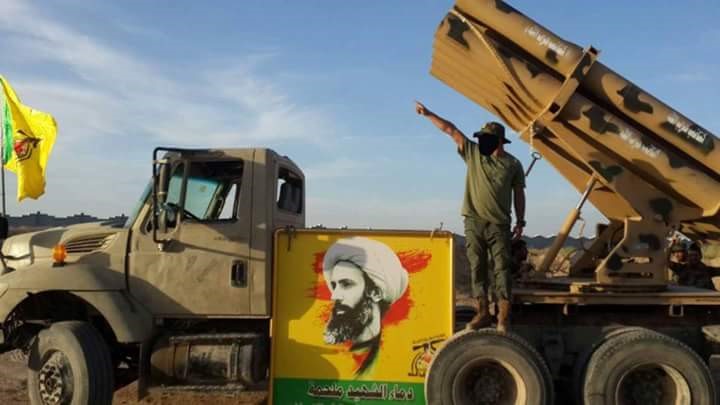
Iran arming Shiite militias in Iraq


June 2016

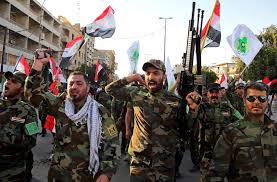
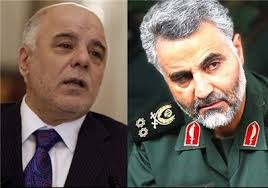
After Iran lost its political hegemony in Iraq with former Iraqi prime minister Nouri Maliki being set aside, and following the military defeats it suffered in operations targeting Salahadin and Tikrit, from late April of this year Iran has launched new military measures under the pretext of liberating the city of Fallujah in Anbar Province, west of Baghdad. Revolutionary Guards Quds Force chief Qassem Suleimani in his new round of military activities in Iraq attempted realize his objective through official and government channels, and by using Shiite military forces, parallel to equipping and arming these units with new weapons. Qassem Suleimani sought to enhance the Popular Mobilization Units (a conglomerate of Iran-backed Shiite militia groups) into a regional military power and downgrade the role played by the Iraqi Army. This Quds Force policy is in line with the same policy Iran sought to implement through the PMU from 2013 and integrating this unit into an entity similar to the IRGC. Arming the PMU with light and medium weapons, along with rockets/missiles through transferring the technology of this weaponry to Iraq are amongst the objectives of the IRGC Quds Force.

Monday, 13 June 2016

Iran-associated militias’ crimes in Fallujah operations


June 2016
The goals pursued by Shiite militia groups associated to Iran and the Revolutionary Guards Quds Force in their presence in the Fallujah operations is no longer a mystery for anyone. The sectarian nature of the Popular Mobilization Units (PMU) and other Shiite militia groups and their approach vis-à-vis the residents of the towns of Garma, Saqlawiya and locals in Fallujah who were able to flee from ISIS control have made it crystal clear the objectives they are following in the Fallujah operations of seeking vengeance against the Sunni community. This has raised major protests and resulted in deep concerns amongst Arab and regional states over the role played by Iran-backed Shiite militia groups in the Fallujah operations. On the other hand, the public announcement made by Hadi al-Ameri and Abu Mahdi al-Muhandis in various press conferences of Fallujah being liberated by PMU forces showed that the PMU and Shiite militias are the main parties involved in the Fallujah operations. Al-Ameri had previously announced the PMU mission will finalize following the Fallujah operations. More recently, however, he has said, “After we have ensured that all non-civilians have exited Fallujah we will attack the city and no one will stop us. No one can liberate Fallujah without PMU participation.”

Wednesday, 1 June 2016

Iran’s attempts to resolve differences amongst Iraq Shiite coalition


May 2016
With the reform movement gaining momentum in the government of Iraqi Prime Minister Haider al-Abadi, along with measures taken by Shiite cleric Muqtada Sadr to achieve these reforms, a serious rift and divide inside the Shiite coalition has become visible more than ever before. Considering the fact that rooted reforms have been the demand of the senior Shiite clergy, various members of the Shiite coalition have publicly supported the reforms proposed by al-Abadi and Sadr, yet behind the scenes they continue to emphasize on the quota system of appointing ministers. This has caused major divides amongst the establishing currents of the National Alliance. Iran is extremely concerned of the Shiite coalition in Iraq crumbling, and therefore to this day Tehran has dispatched a significant number of delegations to resolve these disputes in Iraq. Significant is the fact that none of the Shiite coalition currents are willing to accept the requests raised by Iranian representatives.

Saturday, 28 May 2016

Iran’s response after Jordan summoned its ambassador from Tehran


May 2016
Jordan summoned its ambassador from Tehran in protest to Iran’s meddling policies in Middle East countries. The Iranian regime, finding itself more and more isolated across the region, has resorted its old tactics and tricks by instigating fear and raising threats.

Monday, 23 May 2016

Iran’s actions aimed to disrupt a technocrat cabinet in Iraq


May 2016
Following popular demonstrations in late February across Baghdad’s Green Zone, the Iranian regime became extremely concerned of the Iraqi people’s demands for reform. Through its operatives in Iraq Tehran went to great limits divert the reform project. The issue of corruption under former prime minister Nouri al-Maliki and setting aside judiciary chief Mid’hat Mahmoud were the pillar concerns for Iran, leading the regime to continue its attempts to stonewall all measures to establish a technocrat cabinet, place the reform project before various dilemmas and buy time for its own conspiracies in Iraq. The goal pursued by Tehran was to kick the can down the road and prevent any formation of a technocrat cabinet – specifically demanded by the people – and return to the sectarian-polarized quota cabinet based on agreements made between ruling parties.

Tuesday, 29 March 2016

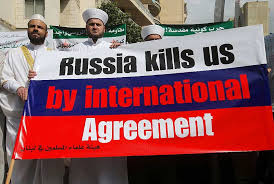
What are the consequences of Russia pulling out of Syria, for Iran?


March 2016
How was this decision made by Russia? Is it a strategically important decision or a mere modus vivendi? The reason we raise these questions is that Russia has announced it will maintain its two air and naval bases in Syria. By keeping its boots in the Middle East bases does Russia intend to continue its operations in Syria?

Sunday, 27 March 2016

Iran terrified of Middle East developments


March 2016
As senior Iranian regime officials continue to complain about the Lebanese Hezbollah blacklisting, recent developments across the Middle East have placed Tehran before even further dilemmas. As mullah Ahmad Khatami, an ultraconservative figure very close to supreme leader Ali Khamenei, continued to moan for Hezbollah, various meetings were taking place between European leaders and Russia in France.

Monday, 21 March 2016

Arms smuggling by Iran IRGC Quds Force for Houthis in Yemen

 March 2016

U.S. Secretary of State John Kerry said a ship carrying arms from Iran for the Houthis was recently confiscated, adding Tehran continues to support the Shiite rebels in Yemen. On the other hand Arab coalition forces in Yemen are attempting to stop and neutralize such arms smuggling from Iran to Yemen.

Wednesday, 16 March 2016

Iran’s demands from the Iraqi government


February 2016
Following the nuclear agreement sealed with the West the Iranian regime is in desperate need of international and regional support. Iran’s influence in Iraq has diminished significantly. In all their meetings with senior Iraqi officials the Iranian counterparts are seen focusing on three main issues: Iran is facing major economic problems and the lowering price of oil – led by Saudi Arabia – has placed severe repercussions on the regime’s economy. Therefore, Tehran is asking Baghdad to trek in line with Iran in their policy making decisions in OPEC. On foreign policy senior Iranian officials have time and again called on Iraqi officials to severe their relations with Saudi Arabia and downgrade their ties with the U.S. and other Arabic countries. Iraq’s positive response to two resolutions condemning Iran in the Cairo and Jeddah sessions was unexpected.

Monday, 14 March 2016

Latest status of Shiite militias in Iraq


March 1, 2016
As the Popular Mobilization Force (PMF) was set aside from all ground assaults launched to liberate Ramadi from the control of Daesh (the Arabic acronym of the self-proclaimed Islamic State), and preventing the PMF’s participation in any operations planned for Mosul, the issue of dissolving or merging the PMF into the Ministry of Defense has gained more serious proportions. With 3 Americans begin abducted in Baghdad, Washington began increasing its pressures on Iraqi Prime Minister Haider al-Abadi to further limit the PMF and Shiite militias. All efforts placed by the Iranian regime and senior PMF officials to maintain this entity have remained futile. Tehran uses the PMF as a lever of pressure against al-Abadi, yet the Iraqi PM, enjoying support from Washington, is further pursuing the policy of restricting the PMF.

Saturday, 12 March 2016

Iran’s demands from the Iraqi government


February 2016
Following the nuclear agreement sealed with the West the Iranian regime is in desperate need of international and regional support. Iran’s influence in Iraq has diminished significantly. In all their meetings with senior Iraqi officials the Iranian counterparts are seen focusing on three main issues: Iran is facing major economic problems and the lowering price of oil – led by Saudi Arabia – has placed severe repercussions on the regime’s economy. Therefore, Tehran is asking Baghdad to trek in line with Iran in their policy making decisions in OPEC. On foreign policy senior Iranian officials have time and again called on Iraqi officials to severe their relations with Saudi Arabia and downgrade their ties with the U.S. and other Arabic countries. Iraq’s positive response to two resolutions condemning Iran in the Cairo and Jeddah sessions was unexpected.

Friday, 11 March 2016

Methods of Iran’s meddling in African countries


March 2016
One of the region’s gaining Iran’s attention to expand its influence has been African countries. These countries have the adequate potential due to their economic poverty.

Saturday, 5 March 2016

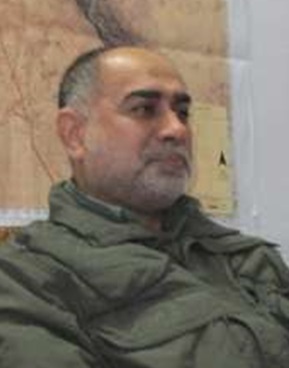
Background on Adnan Ibrahim Mohsen Mohseni(Abu Ali al-Basari)


Background on Adnan Ibrahim Mohsen Mohseni
(Abu Ali al-Basari)
A Senior Commander of Shiite Militias in Iraq
(Director of Intelligence in Iraqi Ministry of Interior)

Biography
Adnan Ibrahim Mohsen Mohseni, with an Iranian identity of Adnan Mohseni, aka Abu Ali al-Basari, was born in 1954 in a town near Basra, southern Iraq. He continued his studies until the fourth year of college. He is known to have lived in Iran for years, where he married and currently has five sons and daughters living there.

Thursday, 3 March 2016

Iran’s plans of using Shiite militias to control al-Abadi


March 2016
The Shiite “Popular Mobilization Forces” being set aside from all ground assaults in Iraq and refusing to pay or decreasing their paychecks by the central government have resulted in an increasing number of defections in these units. Former prime minister Nouri al-Maliki’s expiration date has passed after 8 years sitting on the throne in Iraq and playing into Iran’s interests.

Saturday, 27 February 2016

Iran’s demands from the Iraqi government


February 2016
Following the nuclear agreement sealed with the West the Iranian regime is in desperate need of international and regional support. Iran’s influence in Iraq has diminished significantly. In all their meetings with senior Iraqi officials the Iranian counterparts are seen focusing on three main issues: Iran is facing major economic problems and the lowering price of oil – led by Saudi Arabia – has placed severe repercussions on the regime’s economy. Therefore, Tehran is asking Baghdad to trek in line with Iran in their policy making decisions in OPEC. On foreign policy senior Iranian officials have time and again called on Iraqi officials to severe their relations with Saudi Arabia and downgrade their ties with the U.S. and other Arabic countries. Iraq’s positive response to two resolutions condemning Iran in the Cairo and Jeddah sessions was unexpected.

Why Shiite militias in Iraq oppose launching of Mosul operations?


February 2016
Shiite militias in Iraq, terrified of measures aimed at dissolving the Popular Mobilization Forces, are delaying operations aimed at liberating Mosul in northern Iraq.

Wednesday, 24 February 2016

Iran Quds Force associated Shiite militias in Iraq


Date: February 2016
Attiar al-Resali Battalions
Secretary-General: Adnin Ramidh Kharnub Abid al-Shahmani (Adnan al-Shahmani), MP
Religious Leader: Kazem al-Haeri
Foundation: June 2014

Monday, 22 February 2016

Iran’s measures to disrupt Saudi Arabia’s North Thunder military drills

 February 2016
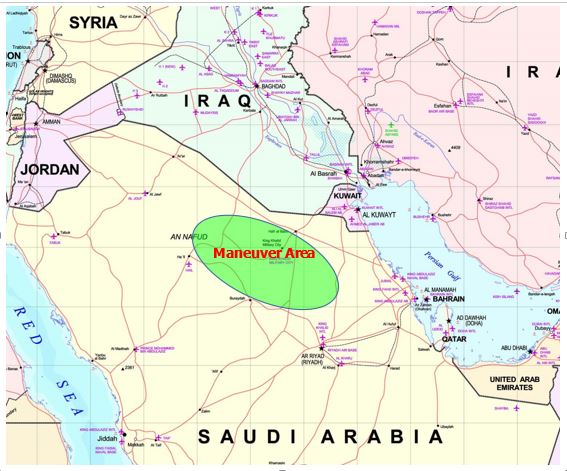
Saudi Arabia’s announcement to carry out the North Thunder military drills for a week in the King Khalid Military City of the country’s northeastern frontier has led to major concerns for Iran. In response Iran has resorted to various measures, including deploying Iraqi Shiite militias to the Saudi border. The military drills area is located in north Saudi Arabia, neighboring the Iraqi provinces of Basra and Ziqar.

Sunday, 21 February 2016

Iran sending Afghan nationals to fight in Syria


February 2016
During the past few months Iran has significantly increased its deployment of Afghan elements to Syria in support of Bashar Assad’s troops. In 2015 their numbers reached 8,000. Considering the fact that these Afghan nationals have no other motive to fight in Syria but to receive permission to live in Iran and receive their money, they are worn out and lose their fighting abilities very quickly. On the other hand, old weapons and lack of adequate training has led to an increasing number of casualties amongst these forces, having a negative impact on their spirits.