Showing posts with label Maliki. Show all posts

Wednesday, 16 March 2016

Iran’s demands from the Iraqi government


February 2016
Following the nuclear agreement sealed with the West the Iranian regime is in desperate need of international and regional support. Iran’s influence in Iraq has diminished significantly. In all their meetings with senior Iraqi officials the Iranian counterparts are seen focusing on three main issues: Iran is facing major economic problems and the lowering price of oil – led by Saudi Arabia – has placed severe repercussions on the regime’s economy. Therefore, Tehran is asking Baghdad to trek in line with Iran in their policy making decisions in OPEC. On foreign policy senior Iranian officials have time and again called on Iraqi officials to severe their relations with Saudi Arabia and downgrade their ties with the U.S. and other Arabic countries. Iraq’s positive response to two resolutions condemning Iran in the Cairo and Jeddah sessions was unexpected.

Monday, 1 February 2016

Iran electing Maliki as Iraq’s future prime minister

January 2016
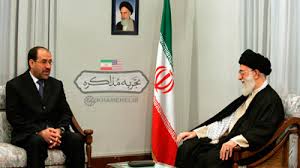
Former Iraqi prime minister Nouri Maliki visited Iran on November 25th, 2015 and returned to Iraq after staying in Tehran for two weeks. Political, intelligence and military officials in Iran in their meetings with Maliki portrayed his road map for the future of Iraq. What Maliki gained from this visit to Tehran was Iran’s permission for him to seriously begin his political activities for the future elections.

Sunday, 27 December 2015

Who is in charge of the Iraqi government?


December 2015
A question recently on my mind is that what individual or group is running the show in Iraq, and where is the future of this country leading to?

To answer this question I will refer to a number of recent developments in Iraq to maybe reach the answer I’m looking for.


Friday, 11 December 2015

Major rifts between al-Abadi and al-Maliki, and the role of Iran’s Quds Force


December 2015
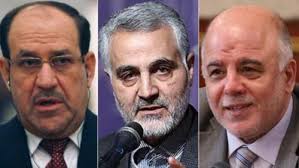
The recent remarks made by Iraqi Prime Minister Haider al-Abadi and his predecessor Nouri al-Maliki made clear the deep rifts between these two figures in a country facing numerous challenges.
Al-Maliki will not rest at a simple no-confidence vote against his enemy. In fact, he will be placing his efforts for a coup d’état while enjoying the backing of the Shiite militia Popular Mobilization Forces (PMF) that is extremely loyal to him. These rifts have intensified after a report issued over Maliki’s role in the fall of Mosul to ISIS.

Monday, 16 November 2015

Enjoying support from Iran’s Quds Force, former Iraq premier targets successor


November 2015
These days Iran views the Prime Ministry of Mr. Haider al-Abadi as in contrast with its interests in Iraq. In this regard Tehran has dispatched its proxy, former Iraqi premier Nouri al-Maliki, to take on Mr. al-Abadi.

Tuesday, 22 September 2015

Developments in Iraq and the Role played by Iran


 September 2015
Three weeks after Iraqi Prime Minister Dr. Haider al-Abadi launched his reforms, Iran is attempting to neutralize some of these steps that are in contrast to its interests in Iraq. Tehran’s initial steps are to relive former prime minister Nouri al-Maliki from the threat of judicial action. After the reforms were announced Iran’s divides with Prime Minister al-Abadi intensified over issues that were directly undermining its interests and hegemony. Prime Minister al-Abadi announced his third reform package, yet developments in Iraq show that the issue of Maliki and Iran’s support for him has placed these reforms facing many obstacles.

Sunday, 20 September 2015

Who is responsible for the Syrian refugee catastrophe?


September 2015
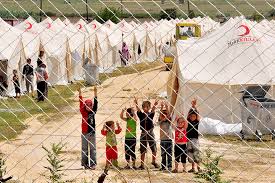
People across the globe were shocked of seeing waves of innocent Syrian men, women and children forced to migrate and seek refuge in European countries. The heartbreaking scene of 71 asylum seekers dying in a truck in Austria, and many others drowning in the Mediterranean Sea while heading from Turkey to Greece is the continued trend of horrific violence committed by the Syrian dictator Bashar Assad with support provided by the Iranian regime against the Syrian nation. If the US government and European Union had not closed their eyes on the crimes committed by Khamenei in Iran, and the bloodbaths caused by Assad and Nouri Maliki in Syria and Iraq, the people of Syria and Iraq would not be displaced today and the terrorist ISIS group would not be controlling large swathes of both of these countries.

Saturday, 19 September 2015

Iran’s policy in backing Maliki


In this piece I would like to evaluate the volume of Iran’s meddling and its influence on the policies of the Iraqi government and reforms launched by Iraqi Prime Minister Dr. Haider al-Abadi.
Following Prime Minister al-Abadi’s August 9th announcement of these reforms against corruption, popular demonstrations gained strength day by day with people chanting for the prosecution of former prime minister Nouri al-Maliki and sacking judiciary chief Mid’hat Mahmoud.

Saturday, 12 September 2015

Iran intervention in Iraqi rallies to prevent prosecution of Maliki

Following the rise in demonstrations by the people of Iraq, the direction of these rallies and people’s demands have focused on the arrest and prosecution of the main element behind corruption, being former Iraqi prime minister and dismissed vice president Nouri al-Maliki. This was the demand of demonstrators against corruption expressed in all cities across Iraq. The call by all protests for the arrest and prosecution of Maliki, and chanting slogans against Iran’s meddling in Iraq disrupted all scenarios prepared beforehand by Iran for the status quo in Iraq. In a matter of a few days Tehran attempted to resort to different methods, from using militants, Maliki’s club-wielders and its Quds Force chief Qassem Suleimani attempting to meet with senior religious leaders, all aimed at diverting the demonstrations from their main objectives. Currently, Suleimani’s main effort in Iraq is to confront all the demonstrations and bring an end to popular protests and rallies. That is his mission and the reason why he is mainly in Iraq these days.

Friday, 21 August 2015

Iran’s measures to prevent Maliki’s prosecution in Iraq


The Iranian regime is gravely concerned of the Iraqi government’s reforms carried out by Prime Minister Haider al-Abadi under pressures from popular demonstrations. The reason is these reform have targeted Iran’s top political proxy in Iraq, being former prime minister and dismissed vice president Nouri al-Maliki. I have obtained news from various sources inside Iran about Tehran’s measures to prevent the arrest and prosecution of Maliki. Below is a list of these reports shedding light on the depth of Iran’s influence in Iraq:

Thursday, 20 August 2015

Introducing a Quds Force-linked terrorist militant group in Iraq and Syria

Group Name: Katayeb Imam Ali
Area of Activity: Syria and Iraq – currently 1,000 men in Syria
Date of Formation: May 2014
Group Leader: Sheikh Shebel al-Zeidi
Deputy: Ali Mousavi (Abu Hassanein)
In May 2014 under orders issued by Iran’s Revolutionary Guards Quds Force, former Iraqi prime minister Nouri al-Maliki gathered those members of the Asaeb al-Haq and Katayeb Imam Ali unhappy about their wages from their own groups, organizing them under a single command unit. Their ranks and files numbered at 2,000 back then and under Quds Force advice Maliki appointed an individual by the name of Sheikh Shebel al-Zeidi as the commander of this unit. This individual had very close relations with Quds Force chief Qassem Suleimani.

Tuesday, 11 August 2015

Amendment presented by Iraqi Prime Minister Haider al-Abadi in response to demonstrators

Iraqi Prime Minister Haider al-Abadi issued a 7-article statement on Sunday, August 9th consisting of changes made in government ranks in line with realizing the demonstrators’ demands. Al-Abadi enjoyed the support of senior religious leaders in Iraq and the declaration of this reform package by al-Abadi was considered a political earthquake by the Iranian regime, showing Tehran was caught completely off guard.


Monday, 3 August 2015

Quds Force using militants in Iraq – Part 4


6. Restructuring the Badr forces
- On June 19th a group of Quds Force commanders went to the 9th Badr office in Baghdad’s Jaderiye district and then went off to inspect various areas of the Iraqi capital. Abu Maryam Ansari, Hadi al-Ameri’s deputy was accompanying this group.

Sunday, 2 August 2015

What is Maliki seeking in his remarks against Saudi Arabia?

In early July former Iraqi prime minister Nouri al-Maliki made some unexpected remarks in saying Saudi Arabia supports terrorist groups. The question is where did such a position come from out of the blue? As you are already aware on March 27th Saudi Arabia launched unanticipated measures by attacking Yemen and saving this country from falling into the hands of Iran and its Houthi proxies. This change of events disrupted all of Tehran’s calculations for the region as it had major plans for the region to completely take over Yemen and take new steps in its ridiculous dreams of becoming the ‘mother of all nations’ in the Middle East.

Wednesday, 29 July 2015

How can ISIS be defeated?

In a previous article I explained on the formation and rise of ISIS thanks to the Quds Force and policies adopted by former Iraqi prime minister Nouri al-Maliki. In this text I want to evaluate the solutions on how to confront ISIS.
Iran believes the environment that ISIS thrives on relies on Sunni grounds, and therefore ISIS and anything resembling ISIS is inevitable in Sunni areas. The solution presented by the Quds Force and Iran against ISIS is to use a force similar to ISIS, and even more vicious and criminal than ISIS, called the Shiite militants. This is the exact solution they are executing these days in Iraq and Syria. Iran’s plan is to use these militants to conquer ISIS-controlled areas, and turn the city, town or village into rubbles to no longer allow Sunnis to live there and force them to migrate.

Tuesday, 28 July 2015

Quds Force using militants in Iraq – Part 3

Following advances made by the armed tribes and the series of defeats suffered by Maliki’s forces in al-Anbar and Mosul, a number of Quds Force experts and commanders stationed in Baghdad and began evaluating the situation on the ground in various fronts. Quds Force military experts in their evaluations on how to confront the armed tribes reached this conclusion that the urgent and immediate solution available under the current circumstances is to use its affiliated militants such as Asaeb al-Haq, Katayeb Hezbollah and Badr militants that needed to be restructured. Under orders issued by Qassem Suleimani and following the example of Revolutionary Guards Bassij units in Iran, the 9th Badr Corps forces with a newly structured ranks and file were dispatched to the warfronts, such as Diyala Province, to reinforce Maliki’s forces. For this new structure Suleimani called on retired Badr commanders – who had worked for the Quds Force back in Iran for years prior to 2003 – and dispatched them as Badr battalions on combat missions. In this regard former Badr commander Abu Mahdi al-Mohandes, a member of Suleimani’s inner circle, was called back and he is currently acting as Suleimani’s chief of staff in Iraq.

Monday, 27 July 2015

Quds Force using militants in Iraq – Part 2

2. Restructuring militant forces in Iraq
In late February a Quds Force commander by the name of Haj Abbas was sent to Iraq with a mission of restructuring militant forces linked to the Asaeb and other groups. These measures were carried out to prepare them for the war in al-Anbar. In his first steps he began restructuring the Asaeb al-Haq with completely new ranks and files, and also recruiting fresh members. The delayed paychecks of Asayeb members, some not paid for 3 months, were all provided for. This group once again launched its operations and their organized ranks were prepared to take part in the al-Anbar war.

Sunday, 26 July 2015

Quds Force using militants in Iraq – Part 1

1. History of using militant forces in al-Anbar Province
- Dispatching militants to the al-Anbar front dates back to mid-January 2014. After Maliki’s classic army and police forces suffered a large number of casualties and lost their spirits for urban warfare in their initial attacks against cities and towns in al-Anbar, the Quds Force began to take action and ordered its associated militias, including Asaeb al-Haq and Katayeb Hezbollah, along with Badr forces, to rush to the support of Maliki’s army and police units in al-Anbar.

Saturday, 25 July 2015

Quds Force Presence in Iraq – Part Three

In late March 2014 Qassem Suleimani was directly supervising and advancing Quds Force measures in Iraq in the Anbar warfront. Later on he sent his deputy, Ismaeel Gha’ani Akbar-nezhad, to Iraq and Anbar to coordinate the latest war conditions in Fallujah and evaluate with Iraq commanders why the war had not progressed. He was also charged to analyze how the fighting could be stretched into the city of Fallujah and provide a victory for Maliki in his crackdown against the people of Anbar Province. To this end the Quds Force sought to pursue the same methods used in Syria to form, as it claimed, the Iraqi Revolutionary Guards with the ranks and files of its militia forces. Tehran also sought to stabilize its hegemonic role over Maliki’s forces and all of Iraq as a result.

War Strategy against ISIS

Recently Mr. Obama delivered a speech in the Pentagon on the war strategy against ISIS, but unfortunately he had nothing new to say and it was just a repeat of the same old, same old, saying we support the Iraqi government and escalated training for Iraqi forces, including Sunni tribes, and continuing to increase the rate of transferring important equipment, such as anti-tank weapons to Iraqi security forces, the Kurdish Peshmerga and tribal fighters.