Showing posts with label Qassem Suleimani. Show all posts

Monday, 13 June 2016

Iran-associated militias’ crimes in Fallujah operations


June 2016
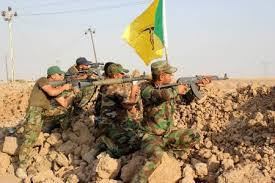
The goals pursued by Shiite militia groups associated to Iran and the Revolutionary Guards Quds Force in their presence in the Fallujah operations is no longer a mystery for anyone. The sectarian nature of the Popular Mobilization Units (PMU) and other Shiite militia groups and their approach vis-à-vis the residents of the towns of Garma, Saqlawiya and locals in Fallujah who were able to flee from ISIS control have made it crystal clear the objectives they are following in the Fallujah operations of seeking vengeance against the Sunni community. This has raised major protests and resulted in deep concerns amongst Arab and regional states over the role played by Iran-backed Shiite militia groups in the Fallujah operations. On the other hand, the public announcement made by Hadi al-Ameri and Abu Mahdi al-Muhandis in various press conferences of Fallujah being liberated by PMU forces showed that the PMU and Shiite militias are the main parties involved in the Fallujah operations. Al-Ameri had previously announced the PMU mission will finalize following the Fallujah operations. More recently, however, he has said, “After we have ensured that all non-civilians have exited Fallujah we will attack the city and no one will stop us. No one can liberate Fallujah without PMU participation.”

Wednesday, 23 December 2015

Iranian regime terrified of Syrian opposition summit in Riyadh


December 2015
Various Syrian opposition forces last week held a summit in Riyadh of Saudi Arabia where they reached important common grounds that can be a starting point to end the war and bloodshed in Syria, or at least shorten its duration significantly; however, this agreement has infuriated the mullahs’ regime in Iran. The question is why has Tehran become so angry in response to this opposition summit and a perspective of the war ending in Syria?

Tuesday, 22 September 2015

Developments in Iraq and the Role played by Iran


 September 2015
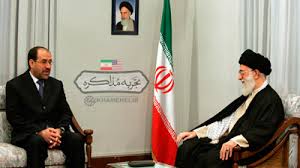
Three weeks after Iraqi Prime Minister Dr. Haider al-Abadi launched his reforms, Iran is attempting to neutralize some of these steps that are in contrast to its interests in Iraq. Tehran’s initial steps are to relive former prime minister Nouri al-Maliki from the threat of judicial action. After the reforms were announced Iran’s divides with Prime Minister al-Abadi intensified over issues that were directly undermining its interests and hegemony. Prime Minister al-Abadi announced his third reform package, yet developments in Iraq show that the issue of Maliki and Iran’s support for him has placed these reforms facing many obstacles.

Iran’s defeats in Yemen


September 2015
The military launched by the Saudi-led Arab coalition against Houthi militants to Yemen aimed at ending their coup d’état and returning the legitimate government to Sana’a is one of the most significant defeats suffered by Iran’s Quds Force chief Qassem Suleimani, as this force is considered as Tehran’s military wing in a number of countries of the region.

Saturday, 19 September 2015

Iran’s policy in backing Maliki


In this piece I would like to evaluate the volume of Iran’s meddling and its influence on the policies of the Iraqi government and reforms launched by Iraqi Prime Minister Dr. Haider al-Abadi.
Following Prime Minister al-Abadi’s August 9th announcement of these reforms against corruption, popular demonstrations gained strength day by day with people chanting for the prosecution of former prime minister Nouri al-Maliki and sacking judiciary chief Mid’hat Mahmoud.

Tuesday, 15 September 2015

Developments in Iraq and the Role played by Iran


September 2015
Three weeks after Iraqi Prime Minister Dr. Haider al-Abadi launched his reforms, Iran is attempting to neutralize some of these steps that are in contrast to its interests in Iraq. Tehran’s initial steps are to relive former prime minister Nouri al-Maliki from the threat of judicial action. After the reforms were announced Iran’s divides with Prime Minister al-Abadi intensified over issues that were directly undermining its interests and hegemony. Prime Minister al-Abadi announced his third reform package, yet developments in Iraq show that the issue of Maliki and Iran’s support for him has placed these reforms facing many obstacles.

Saturday, 12 September 2015

Iran intervention in Iraqi rallies to prevent prosecution of Maliki

Following the rise in demonstrations by the people of Iraq, the direction of these rallies and people’s demands have focused on the arrest and prosecution of the main element behind corruption, being former Iraqi prime minister and dismissed vice president Nouri al-Maliki. This was the demand of demonstrators against corruption expressed in all cities across Iraq. The call by all protests for the arrest and prosecution of Maliki, and chanting slogans against Iran’s meddling in Iraq disrupted all scenarios prepared beforehand by Iran for the status quo in Iraq. In a matter of a few days Tehran attempted to resort to different methods, from using militants, Maliki’s club-wielders and its Quds Force chief Qassem Suleimani attempting to meet with senior religious leaders, all aimed at diverting the demonstrations from their main objectives. Currently, Suleimani’s main effort in Iraq is to confront all the demonstrations and bring an end to popular protests and rallies. That is his mission and the reason why he is mainly in Iraq these days.

Friday, 21 August 2015

Iran’s measures to prevent Maliki’s prosecution in Iraq


The Iranian regime is gravely concerned of the Iraqi government’s reforms carried out by Prime Minister Haider al-Abadi under pressures from popular demonstrations. The reason is these reform have targeted Iran’s top political proxy in Iraq, being former prime minister and dismissed vice president Nouri al-Maliki. I have obtained news from various sources inside Iran about Tehran’s measures to prevent the arrest and prosecution of Maliki. Below is a list of these reports shedding light on the depth of Iran’s influence in Iraq:

Thursday, 20 August 2015

Introducing a Quds Force-linked terrorist militant group in Iraq and Syria

Group Name: Katayeb Imam Ali
Area of Activity: Syria and Iraq – currently 1,000 men in Syria
Date of Formation: May 2014
Group Leader: Sheikh Shebel al-Zeidi
Deputy: Ali Mousavi (Abu Hassanein)
In May 2014 under orders issued by Iran’s Revolutionary Guards Quds Force, former Iraqi prime minister Nouri al-Maliki gathered those members of the Asaeb al-Haq and Katayeb Imam Ali unhappy about their wages from their own groups, organizing them under a single command unit. Their ranks and files numbered at 2,000 back then and under Quds Force advice Maliki appointed an individual by the name of Sheikh Shebel al-Zeidi as the commander of this unit. This individual had very close relations with Quds Force chief Qassem Suleimani.

Friday, 31 July 2015

New Quds Force initiative in Iraq

1. The Quds Force was stopped in the Tikrit operations before the city gates and witnessed heavy casualties suffered by its affiliated militants and Popular Mobilization Forces (PMF). This defeat forced Iraqi Prime Minister Haider al-Abadi to call on Washington to enter the scene and finalize the battle. Subsequently the US conditioned any action to Revolutionary Guards forces evacuating Iraq, forcing the Iranian regime to pull out its combat troops taking part in the Tikrit battle and have them returned to Iran. Therefore, only its artillery and missile units were maintained and strengthened in Iraq.

New tactics used by Quds Force in Iraq

1. Following the defeats suffered by the Quds Force in the operation to retake Tikrit and Iraq’s request from Iran to pull back Revolutionary Guards combat units, Iran has now resorted to new tactics in Iraq.
2. To replace IRGC combat units in Iraq, the Quds Force is currently using local forces and forming its necessary units to carry out its missions in Iraq.

Saturday, 25 July 2015

Quds Force Presence in Iraq – Part Three

In late March 2014 Qassem Suleimani was directly supervising and advancing Quds Force measures in Iraq in the Anbar warfront. Later on he sent his deputy, Ismaeel Gha’ani Akbar-nezhad, to Iraq and Anbar to coordinate the latest war conditions in Fallujah and evaluate with Iraq commanders why the war had not progressed. He was also charged to analyze how the fighting could be stretched into the city of Fallujah and provide a victory for Maliki in his crackdown against the people of Anbar Province. To this end the Quds Force sought to pursue the same methods used in Syria to form, as it claimed, the Iraqi Revolutionary Guards with the ranks and files of its militia forces. Tehran also sought to stabilize its hegemonic role over Maliki’s forces and all of Iraq as a result.

Sunday, 19 July 2015

Quds Force plot to form Iraqi Revolutionary Guards


From long ago due to the degrading position of former Iraqi prime minister Nouri al-Maliki and continuing uprisings in this country that led to numerous defeats for Maliki’s army, Iran’s Quds Force has been plotting to form a proxy militant force similar to the Revolutionary Guards and Bassij forces inside Iran. 

Monday, 13 July 2015

Active Quds Force presence – Saberin Unit – in Iraq and its members killed in fight against ISIS

18 June 2014
While Iranian officials in their official media talk about the policy of not sending forces to Iraq, a newly formed organ of this regime, known as the “Popular Headquarters in Defense of Shiite Sanctuaries” is recruiting volunteers to be dispatched to Iraq to confront Sunni tribes and ISIS; – Saberin Unit – whereas during the past year the Revolutionary Guards (IRGC) has been dispatching its forces to Iraq coinciding with the start of the Iraqi people’s uprising in Anbar. IRGC forces have entered Iraq in many areas under Quds Force command. Quds Force members carried out the following after the occupation of Mosul:

Monday, 29 June 2015

Introducing Militant Groups in Iraq – Katayeb Hezbollah


The Quds Force is currently expanding its sphere of influence in Iraq through its widespread network of affiliated militant groups. Senior Quds Force commanders, including Qassem Suleimani and Abu Mahdi Mohandess are in Iraq to organize and utilize these militant groups. Asayeb al-Haq, led by Gheis Khazali, along with the 9th Badr Corps militants led by Hadi al-Ameri, are the main such groups. Here is more input on the Katayeb Hezbollah that plays a major role in implement the Iranian regime’s policy in Iraq.