Showing posts with label Quds. Show all posts

Sunday, 18 October 2015

Impact of nuclear deal on Quds Force-backed militias in Iraq


October 2015
Following the final touches of the nuclear accord between the West and Iran, very immediate impacts can be seen on the Quds Force apparatus, being Iran’s main force of exporting terrorism. One such scene is the groups associated to the Quds Force in Iraq. I have received a considerable amount of information about the status of these militia groups in Iraq on which I will shed light below:

Sunday, 11 October 2015

Senior IRGC commander Hossein Hamedani killed in Syria


Hossein Hamedani, deputy commander of the so-called Imam Hossein Base and Iran’s point man in Syria, has been killed in Aleppo, said the Revolutionary Guards Public Relations Office on Friday, October 9th. He was one of the founding commanders of the IRGC and a leading figure in the terrorist Quds Force, commanding and directing many terrorist attacks in regional countries under Iran’s influence.

Saturday, 3 October 2015

Iran Revolution Guards Intelligence Organization


September 2015
Iranian supreme leader Ali Khamenei made a speech in his meeting with Revolutionary Guards commanders on September 16th focusing on threats his regime is facing after the nuclear agreement and the IRGC’s duty to confront these threats. Khamenei specifically emphasized on the duty of the IRGC intelligence in saying, “The IRGC intelligence must constantly follow up and identify threats.” What is the IRGC intelligence Khamenei was emphasizing on? Where does it stand in the hierarchy and structure of the Iranian regime? What is its own framework?

Wednesday, 23 September 2015

Mustafa Abdul-Hamid Hussein al-Atabi A ringleader of Quds Force terror network in Iraq


Biography and background of Mustafa Abdul-Hamid Hussein al-Atabi
Advisor to Iraqi Minister of Interior
A ringleader of Quds Force terror network in Iraq
After Mohamed al-Qaban took over Iraq’s Ministry of Interior, he hired into this ministry some of the long-standing Badr Brigade commanders, whom had a long history of cooperation with the Quds Force. Recently, Mustafa Abdul-Hamid Hussein al-Atabi, also known as Abu Mustafa Sheibani, who is a ringleader of the Quds Force’s terror network in Iraq, has begun his work as an advisor to the Iraqi Minister of Interior.

Gulf Countries in All-Out Confrontation Against Iran


Why are the Gulf Cooperation Countries in a flagrant confrontation against Iran?
The answer to this question can be easily found in the events seen in Arab countries and GCC members states. Currently the leaders of these nations view Iran as a destabilizing country that goes the limits to create a crisis in the stable areas of the region.

Tuesday, 22 September 2015

Iraqi Army, police clashing with Quds Force-associated Hezbollah militants in Baghdad


One day after 18 Turk nationals were abducted from a stadium construction site in Baghdad’s Sadr City, carried out on Wednesday, September 2nd by a group of Katayeb Hezbollah militants wearing SWAT uniforms who raided the site with 20 bullet-proof, double axes vehicles, Baghdad Operations Command issued a statement saying:

Iran’s defeats in Yemen


September 2015
The military launched by the Saudi-led Arab coalition against Houthi militants to Yemen aimed at ending their coup d’état and returning the legitimate government to Sana’a is one of the most significant defeats suffered by Iran’s Quds Force chief Qassem Suleimani, as this force is considered as Tehran’s military wing in a number of countries of the region.

Quds Force actions in Iraq after the start of reforms

Qasem Soleymani & Hadi Ameri
After popular demonstrations broke out against the situation of the economy and electricity in the 50 Degree heat of Iraq, Mr. Al-Abadi was forced to announce reform packages. Although al-Abadi’s reform packages – 4 announced to this date – have not been implemented, yet it has clearly upset the Iranian government. Iran held an urgent Supreme National Security Council meeting in early September 2015 meeting to assess the situation in Iraq and Yemen. In previous articles we mentioned the decisions made regarding Yemen, yet in this article we want to explain about the issues talked about Iraq.

Sunday, 20 September 2015

The process of the Quds Force’s infiltration into Yemen


General information
-         Yemen is a country in the Middle East; just south of Saudi Arabia. Its capital is the City of Sanaa.
-         Area: 527,968 km2
-         Population: 23,013,386 (based on a 2008 analysis)
-         Religion: A combination of different branches of Shiite and Sunni Islam, 42% of which are Shiite. Some 35% of the Shiites are Zaidiya (believe in 5 Imams) and the rest believe in 12 and 7 (Ismailia) Imams. The Sunnis are mostly Shafis and there is a small percentage of Christian and Jews.
-         Yemen has several islands; the most important of which are: Saghreh Island in the Arab Sea and Hanish Island in the Red Sea.

Saturday, 19 September 2015

Fingers pointed at Iran & Hezbollah as arms, weapons found in Kuwait


2 September 2015
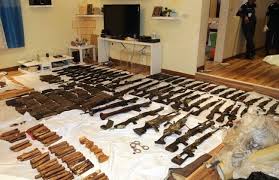
The Kuwait general prosecutor accused 26 individuals, including 25 Kuwaitis and 1 Iranian, of spying for Iran and the Lebanese Hezbollah, and preparations for an attack against Kuwait’s sovereignty, security and stability. Now two questions come to mind:
What is the objective sought by Tehran and Hezbollah in Kuwait?
What is the impact of these accusations on future relations between Iran, and Kuwait and other Arab countries following the nuclear agreement?

Iran’s policy in backing Maliki


In this piece I would like to evaluate the volume of Iran’s meddling and its influence on the policies of the Iraqi government and reforms launched by Iraqi Prime Minister Dr. Haider al-Abadi.
Following Prime Minister al-Abadi’s August 9th announcement of these reforms against corruption, popular demonstrations gained strength day by day with people chanting for the prosecution of former prime minister Nouri al-Maliki and sacking judiciary chief Mid’hat Mahmoud.

Friday, 18 September 2015

Five protest organizers, civil activists assassinated in Iraq


Sources of the civil current organizing popular demonstrations in Iraq these days said unknown men have assassinated four protest organizers in the provinces of Ziqar and Basra in the south. Amongst those murdered is Sheikh Sabah al-Karmush, one of the most renowned sit-in organizers in Basra Province who died of his wounds after an IED placed into his vehicle detonated.

Tuesday, 15 September 2015

Iran’s plan to continue interventions in Yemen

The main task of the Iranian embassy in Sana’a is to provide financial, intelligence and military support for Houthi rebels and forces loyal to Ali Abdulla Saleh against the legal Yemeni government. The Iranian embassy in Sana’a has turned from a diplomatic center into an operations command center. Prior to the war that began in March of this year, Iran was supporting the Houthis by sending them weapons through air and land. Every week, 14 planes flew from Tehran to Sana’a.

Developments in Iraq and the Role played by Iran


September 2015
Three weeks after Iraqi Prime Minister Dr. Haider al-Abadi launched his reforms, Iran is attempting to neutralize some of these steps that are in contrast to its interests in Iraq. Tehran’s initial steps are to relive former prime minister Nouri al-Maliki from the threat of judicial action. After the reforms were announced Iran’s divides with Prime Minister al-Abadi intensified over issues that were directly undermining its interests and hegemony. Prime Minister al-Abadi announced his third reform package, yet developments in Iraq show that the issue of Maliki and Iran’s support for him has placed these reforms facing many obstacles.

Qassem Suleimani’s efforts to quell Iraq demonstrations

Informed sources in Najaf Province confirmed the presence of Iranian Quds Force chief Qassem Suleimani in this province to meet with Grand Ayatollah Ali al-Sistani in order to reach an agreement aimed at quelling popular demonstrations.

Sunday, 13 September 2015

Who was behind the Bahrain bombings?

On Saturday, August 29th in the news I read a report about a bombing in Bahrain in which a police officer was killed and 7 others were left injured. All of a sudden my mind became focused on this country’s northern neighbor, Iran. The report went on to explain that one of the individuals arrested in relation to the Bahrain bombing had received his training in coordination with various al-Dawa Party leaders in the city of Karbala in southern Iraq, and the boat for the attack was provided by Iran’s Revolutionary Guards (IRGC).

Saturday, 12 September 2015

Iran intervention in Iraqi rallies to prevent prosecution of Maliki

Following the rise in demonstrations by the people of Iraq, the direction of these rallies and people’s demands have focused on the arrest and prosecution of the main element behind corruption, being former Iraqi prime minister and dismissed vice president Nouri al-Maliki. This was the demand of demonstrators against corruption expressed in all cities across Iraq. The call by all protests for the arrest and prosecution of Maliki, and chanting slogans against Iran’s meddling in Iraq disrupted all scenarios prepared beforehand by Iran for the status quo in Iraq. In a matter of a few days Tehran attempted to resort to different methods, from using militants, Maliki’s club-wielders and its Quds Force chief Qassem Suleimani attempting to meet with senior religious leaders, all aimed at diverting the demonstrations from their main objectives. Currently, Suleimani’s main effort in Iraq is to confront all the demonstrations and bring an end to popular protests and rallies. That is his mission and the reason why he is mainly in Iraq these days.

Four protest organizers, civil activists assassinated in Iraq


Sources of the civil current organizing popular demonstrations in Iraq these days said unknown men have assassinated four protest organizers in the provinces of Ziqar and Basra in the south. Amongst those murdered is Sheikh Sabah al-Karmush, one of the most renowned sit-in organizers in Basra Province who died of his wounds after an IED placed into his vehicle detonated.

Friday, 11 September 2015

Fingers pointed at Iran & Hezbollah as arms, weapons found in Kuwait


2 September 2015
The Kuwait general prosecutor accused 26 individuals, including 25 Kuwaitis and 1 Iranian, of spying for Iran and the Lebanese Hezbollah, and preparations for an attack against Kuwait’s sovereignty, security and stability. Now two questions come to mind:
What is the objective sought by Tehran and Hezbollah in Kuwait?
What is the impact of these accusations on future relations between Iran, and Kuwait and other Arab countries following the nuclear agreement?

Wednesday, 9 September 2015

Who rules over Iraq, Heydar al-Abadi or Qassem Suleimani?

For the first time and in an unusual act, Iraqi Prime Minister Heydar al-Abadi lashed out at Iran’s Quds Force commander Qassem Suleimani, who is the most influential Iranian figure in the region.

Since Ayad Alawi’s premiership in 2003 and afterwards during Ibrahim Jafari’s time in office and then Nouri al-Maliki and now Heydar al-Abadi, never has any Iraqi PM openly disagreed with general Suleimani. He was always considered by Iran as Iraq’s security advisor.