Showing posts with label al-Abadi. Show all posts

Saturday, 18 June 2016

Iran pushing for no-confidence vote against al-Abadi


June 2016
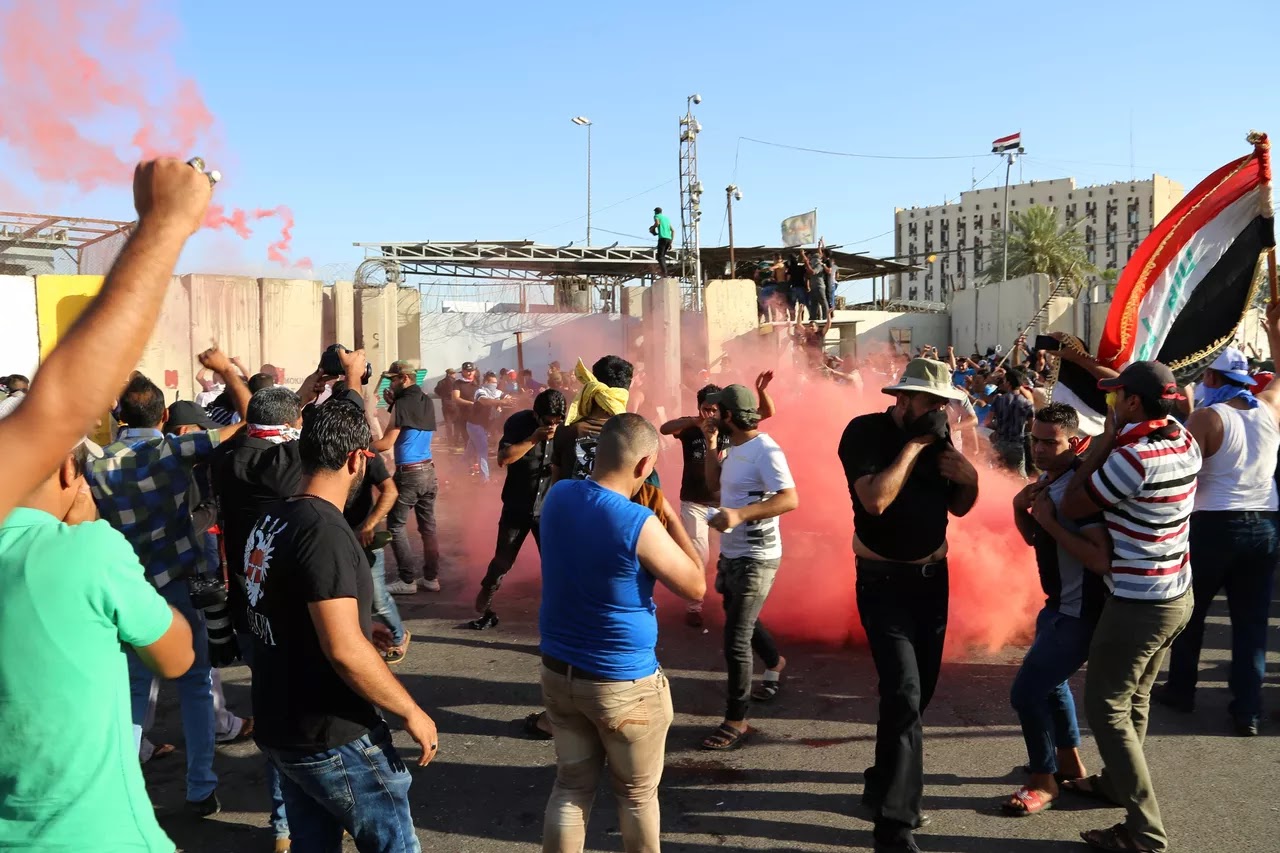
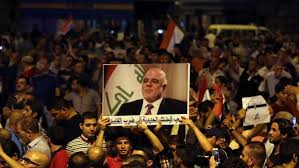
The occupation of the Iraqi Parliament and Prime Ministry Office afterwards by protesters proved Iran has lost control of the situation on the ground in Iran and this regime is no longer dictating its will to Shiite groups.
In most demonstrations despite the fact that the Iranian ambassador in Iraq would call on its associated elements to refrain from voicing anti-Iranian regime slogans, the protesters – infuriated over poverty and lack of security – were heard chanting “Iran, Out, Out.” This slogan disrupted all the Iranian regime’s calculations and in a senior Iranian regime official has reportedly said Tehran spent billions in Iraq and they still chant slogans against the Islamic republic of Iran in their demonstrations.

Monday, 23 May 2016

Iran’s actions aimed to disrupt a technocrat cabinet in Iraq


May 2016
Following popular demonstrations in late February across Baghdad’s Green Zone, the Iranian regime became extremely concerned of the Iraqi people’s demands for reform. Through its operatives in Iraq Tehran went to great limits divert the reform project. The issue of corruption under former prime minister Nouri al-Maliki and setting aside judiciary chief Mid’hat Mahmoud were the pillar concerns for Iran, leading the regime to continue its attempts to stonewall all measures to establish a technocrat cabinet, place the reform project before various dilemmas and buy time for its own conspiracies in Iraq. The goal pursued by Tehran was to kick the can down the road and prevent any formation of a technocrat cabinet – specifically demanded by the people – and return to the sectarian-polarized quota cabinet based on agreements made between ruling parties.

Wednesday, 16 March 2016

Iran’s demands from the Iraqi government


February 2016
Following the nuclear agreement sealed with the West the Iranian regime is in desperate need of international and regional support. Iran’s influence in Iraq has diminished significantly. In all their meetings with senior Iraqi officials the Iranian counterparts are seen focusing on three main issues: Iran is facing major economic problems and the lowering price of oil – led by Saudi Arabia – has placed severe repercussions on the regime’s economy. Therefore, Tehran is asking Baghdad to trek in line with Iran in their policy making decisions in OPEC. On foreign policy senior Iranian officials have time and again called on Iraqi officials to severe their relations with Saudi Arabia and downgrade their ties with the U.S. and other Arabic countries. Iraq’s positive response to two resolutions condemning Iran in the Cairo and Jeddah sessions was unexpected.

Saturday, 27 February 2016

Iran’s demands from the Iraqi government


February 2016
Following the nuclear agreement sealed with the West the Iranian regime is in desperate need of international and regional support. Iran’s influence in Iraq has diminished significantly. In all their meetings with senior Iraqi officials the Iranian counterparts are seen focusing on three main issues: Iran is facing major economic problems and the lowering price of oil – led by Saudi Arabia – has placed severe repercussions on the regime’s economy. Therefore, Tehran is asking Baghdad to trek in line with Iran in their policy making decisions in OPEC. On foreign policy senior Iranian officials have time and again called on Iraqi officials to severe their relations with Saudi Arabia and downgrade their ties with the U.S. and other Arabic countries. Iraq’s positive response to two resolutions condemning Iran in the Cairo and Jeddah sessions was unexpected.

Sunday, 27 December 2015

Who is in charge of the Iraqi government?


December 2015
A question recently on my mind is that what individual or group is running the show in Iraq, and where is the future of this country leading to?

To answer this question I will refer to a number of recent developments in Iraq to maybe reach the answer I’m looking for.


Friday, 11 December 2015

Major rifts between al-Abadi and al-Maliki, and the role of Iran’s Quds Force


December 2015
The recent remarks made by Iraqi Prime Minister Haider al-Abadi and his predecessor Nouri al-Maliki made clear the deep rifts between these two figures in a country facing numerous challenges.
Al-Maliki will not rest at a simple no-confidence vote against his enemy. In fact, he will be placing his efforts for a coup d’état while enjoying the backing of the Shiite militia Popular Mobilization Forces (PMF) that is extremely loyal to him. These rifts have intensified after a report issued over Maliki’s role in the fall of Mosul to ISIS.

Monday, 16 November 2015

Enjoying support from Iran’s Quds Force, former Iraq premier targets successor


November 2015
These days Iran views the Prime Ministry of Mr. Haider al-Abadi as in contrast with its interests in Iraq. In this regard Tehran has dispatched its proxy, former Iraqi premier Nouri al-Maliki, to take on Mr. al-Abadi.

Tuesday, 22 September 2015

Developments in Iraq and the Role played by Iran


 September 2015
Three weeks after Iraqi Prime Minister Dr. Haider al-Abadi launched his reforms, Iran is attempting to neutralize some of these steps that are in contrast to its interests in Iraq. Tehran’s initial steps are to relive former prime minister Nouri al-Maliki from the threat of judicial action. After the reforms were announced Iran’s divides with Prime Minister al-Abadi intensified over issues that were directly undermining its interests and hegemony. Prime Minister al-Abadi announced his third reform package, yet developments in Iraq show that the issue of Maliki and Iran’s support for him has placed these reforms facing many obstacles.

Quds Force actions in Iraq after the start of reforms

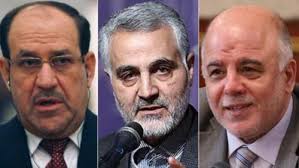
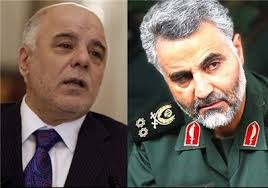
Qasem Soleymani & Hadi Ameri
After popular demonstrations broke out against the situation of the economy and electricity in the 50 Degree heat of Iraq, Mr. Al-Abadi was forced to announce reform packages. Although al-Abadi’s reform packages – 4 announced to this date – have not been implemented, yet it has clearly upset the Iranian government. Iran held an urgent Supreme National Security Council meeting in early September 2015 meeting to assess the situation in Iraq and Yemen. In previous articles we mentioned the decisions made regarding Yemen, yet in this article we want to explain about the issues talked about Iraq.

Saturday, 19 September 2015

Iran’s policy in backing Maliki


In this piece I would like to evaluate the volume of Iran’s meddling and its influence on the policies of the Iraqi government and reforms launched by Iraqi Prime Minister Dr. Haider al-Abadi.
Following Prime Minister al-Abadi’s August 9th announcement of these reforms against corruption, popular demonstrations gained strength day by day with people chanting for the prosecution of former prime minister Nouri al-Maliki and sacking judiciary chief Mid’hat Mahmoud.

Tuesday, 25 August 2015

Iran’s pro-Maliki intervention in popular demonstrations in Iraq


Popular demonstrations in Iraq against government corruption, which targeted pro-Iran elements, caught Iran’s rulers by surprise. In order to control the situation in Iraq, they first attempted to enter militias and popular mobilization forces with civilian cloths and without any placards and flags into the demonstrations. By doing so they intended to derail the demonstrations towards their own objectives. 

Saturday, 22 August 2015

Iran after the nuclear accord – Increasing or decreasing meddling in the Middle East


The main characteristic of the Iranian regime, differencing it from other dictatorial regimes, is its meddling in other countries dubbed by its senior officials as “exporting the revolution”, killings and massacre in other countries. When Khomeini was forced to give in to the 1988 ceasefire in the Iran-Iraq War, his regime began focusing on meddling in countries across the Middle East. This meant they had suffered a major defeat in the war with Iraq and sought to compensate their losses through such interferences.

Friday, 21 August 2015

Iran’s measures to prevent Maliki’s prosecution in Iraq


The Iranian regime is gravely concerned of the Iraqi government’s reforms carried out by Prime Minister Haider al-Abadi under pressures from popular demonstrations. The reason is these reform have targeted Iran’s top political proxy in Iraq, being former prime minister and dismissed vice president Nouri al-Maliki. I have obtained news from various sources inside Iran about Tehran’s measures to prevent the arrest and prosecution of Maliki. Below is a list of these reports shedding light on the depth of Iran’s influence in Iraq:

Tuesday, 11 August 2015

Amendment presented by Iraqi Prime Minister Haider al-Abadi in response to demonstrators

Iraqi Prime Minister Haider al-Abadi issued a 7-article statement on Sunday, August 9th consisting of changes made in government ranks in line with realizing the demonstrators’ demands. Al-Abadi enjoyed the support of senior religious leaders in Iraq and the declaration of this reform package by al-Abadi was considered a political earthquake by the Iranian regime, showing Tehran was caught completely off guard.


Monday, 3 August 2015

Quds Force using high school students, youths in Iraq


Another devious method adopted by the Quds Force to increase its influence and impose its hegemony in Iraq is using various leverages to train Shiite militants and Popular Mobilization Force troops. To reach these objectives the Revolutionary Guards has according to specific planning and defined links began to expand its network of influence.

Friday, 31 July 2015

New Quds Force initiative in Iraq

1. The Quds Force was stopped in the Tikrit operations before the city gates and witnessed heavy casualties suffered by its affiliated militants and Popular Mobilization Forces (PMF). This defeat forced Iraqi Prime Minister Haider al-Abadi to call on Washington to enter the scene and finalize the battle. Subsequently the US conditioned any action to Revolutionary Guards forces evacuating Iraq, forcing the Iranian regime to pull out its combat troops taking part in the Tikrit battle and have them returned to Iran. Therefore, only its artillery and missile units were maintained and strengthened in Iraq.

Wednesday, 29 July 2015

How can ISIS be defeated?

In a previous article I explained on the formation and rise of ISIS thanks to the Quds Force and policies adopted by former Iraqi prime minister Nouri al-Maliki. In this text I want to evaluate the solutions on how to confront ISIS.
Iran believes the environment that ISIS thrives on relies on Sunni grounds, and therefore ISIS and anything resembling ISIS is inevitable in Sunni areas. The solution presented by the Quds Force and Iran against ISIS is to use a force similar to ISIS, and even more vicious and criminal than ISIS, called the Shiite militants. This is the exact solution they are executing these days in Iraq and Syria. Iran’s plan is to use these militants to conquer ISIS-controlled areas, and turn the city, town or village into rubbles to no longer allow Sunnis to live there and force them to migrate.

Saturday, 25 July 2015

War Strategy against ISIS

Recently Mr. Obama delivered a speech in the Pentagon on the war strategy against ISIS, but unfortunately he had nothing new to say and it was just a repeat of the same old, same old, saying we support the Iraqi government and escalated training for Iraqi forces, including Sunni tribes, and continuing to increase the rate of transferring important equipment, such as anti-tank weapons to Iraqi security forces, the Kurdish Peshmerga and tribal fighters.

Tuesday, 21 July 2015

ISIS & Shiite militias using juveniles in war

Based on news reports obtained from areas under the control of ISIS in Iraq’s Neinawa and al-Anbar provinces, ISIS has begun recruiting juveniles, training them in military warfare and even suicide attacks, preparing them for various types of operations.


Saturday, 11 July 2015

UN SRSG in Iraq Ján Kubiš taking part in the 9th Badr militant group’s founding anniversary ceremony


In news reports from Iraq on July 4th I realized that Mr. Ján Kubiš, the UN Special Representative of the Secretary-General in Iraq had participated in the founding anniversary ceremony held for the Badr Organization. I was left shocked and utterly surprised. The Badr Organization is one of the groups linked to the Quds Force and was formed by this terrorist force back in Iran. It is led by Hadi al-Ameri, currently the Secretary-General of this organization, and a longtime member of the Quds Force who lived in Iran for years.